Chapter 5: College Life
College life was exciting, especially living in the dorm with other boys, as they were excited to be away from home for the first time and out on their own. Of course, the stress of academics leads to ways to let off steam. Usually, this took the form of pranks. On campus, I lived on the fourth floor of Madison Dorm, and one morning, I opened my door to find my Vespa scooter parked at my door. I had to muster three of my friends to carry it back down four flights of stairs. The gauntlet had been thrown down, and I would respond in kind. On campus, we had our own radio station, featuring student announcers who played music and announced news stories. I wrote a script and had one of the regular news casters record it to a small portable reel-to-reel tape recorder I owned. I then hooked the tape recorder to the radio in my dorm room. That night, when one of the boys from down the hall came into the room to speak to my roommate, I turned on the hidden tape recorder that played through the radio speaker. The familiar voice of the campus newscaster came on with an urgent breaking news announcement! “The United States has just declared war on Soviet Russia!” Russia has bombed New York City and Washington, D.C., and the U.S. has retaliated with ICBMs on Moscow and Leningrad. Stay tuned for more details as they come in! Upon hearing this, the boy ran out into the hall and screamed, “We are at war with Russia!”
Causing boys to come out of their rooms following him in a panic into the room to hear it for themselves, as more details were revealed about California also being bombed. They became angry at the idea that this was happening and at how it would affect their lives. Then, as the room was filled with scared, angry boys, the announcer spoke these words…” More details on the war crisis, to the boys of the fourth floor of Madison…Suckers! The shocked realization that they had just been had made them weak at their knees; they didn’t know whether to laugh or cry with relief. Needless to say, after that night, no one ever wanted to play a prank on me again.
During my years in college, I held a variety of jobs. One was as an ambulance driver/attendant. With minimal first aid training. My partner and I would be stationed at one of Asheville’s fire stations, where we would be on duty the entire weekend. My biggest fear was that someone we picked up would die before we could get them to the hospital. Fortunately, everyone we picked up who was alive made it to the hospital. I recall a terrible plane crash just outside of Asheville, where all the ambulances in the area were to go to the crash site. However, some officials decided that my ambulance needed to remain in Asheville for emergencies. Given the horror stories about the crash site, I'm grateful I didn't witness it firsthand.
One of the more memorable calls involved a baby. The ambulance was stationed at the fire department in West Asheville. We received a call one evening from a resident just down the street from the department. In a panic, a mother cried that her infant was choking, that they were down the street driving towards the station, and wanted the ambulance to meet them quickly. We jumped into the ambulance, and with lights flashing and sirens screaming, we pulled out of the station and down the road to intersect with the oncoming car. My only thoughts were what I would do once the baby’s life was in my hands. Thinking of holding the baby by the ankles upside down and firmly patting its back was all I could think of at the moment. Suddenly, a car flashed its lights as it stopped in front of the ambulance. A woman with a baby jumped out and ran to the ambulance, and I jumped out with my arms reaching out. She literally threw the baby to me. The impact of catching the baby must have dislodged whatever obstruction had caused the choking as the baby began to cry. The mother thanked me profusely for my healing touch, never realizing she was the one who had saved her child.
Because of the dry county laws in the 1960s, if you wanted a shot of whiskey in Cullowhee, it was necessary to drive 50 miles to Asheville. On numerous occasions, I would do a whiskey run on my Vespa from college to Asheville to pick up bottles of whiskey that my classmates had ordered. Paid enough to keep one of the bottles for myself. That was as close as I came to being a bootlegger, unlike my roommate, who could afford a late model car because he actually had a bootleg run. Yes, in the mountains around us, they were still making moonshine and hiring drivers for illegal transportation. My roommate tried to get me involved, saying they would furnish a car with a license tag and a name from a tombstone, so if you were ever chased, you could ditch the car in the woods.
I told him that I appreciated the offer, but with my father on the police force in Asheville, I already felt like an escaped criminal on the run.
This was the 1960s, before helmet laws; my only headgear was a pair of sunglasses. One weekend, when I was only
a block away from home on Haywood Road, a car pulled out of a gas station in front of me. I slammed on the brakes as the Vespa slid sideways, crashing into the car. Had I been straddling a motorcycle, my leg would have been crushed. Fortunately, with the Vespa, my legs sang free, so I slid across the hood, falling headfirst on the pavement. I used to joke that the head injury was not that bad; other than smiling a lot and laughing out of context, I was fine. My grandfather Dodd came to my transportation rescue by giving me his old Buick.
My father wanted me to be a lawyer, probably so he could sue people for free, so I majored in political science. The classes bored me, so I didn’t do well at all. Western Carolina College
operated on a quarter system, meaning that if your grades were not up to par, you were not allowed back for the next three months, essentially resulting in a failed academic standing.
I had just gotten a notification that I had flunked out of college for a third time, I had a few drinks of Jack Daniels and Coke, and in a tipsy state of mind, I showed up at an Army recruiting office. Where the recruiter spun tall tales about how exciting military life was while supplying you with food, clothing, a bed, and free travel to distant lands. I remember thinking I wasn’t tipsy enough to buy into this sales pitch! Then, suddenly, to my surprise, I saw my father standing in the doorway. “What are you doing here?” I asked. He said that he had received a letter from the college about my failing again, and though I might do something rash like joining the Army, he showed up to say,
“ Don’t give up, try again." I’m sure he must have recalled that day each time he saw me walk across the stage, first for my Bachelor’s Degree and then for my Master’s Degree. I’m also sure he was proud to tell his fellow policemen that his son was a college professor.
I finally changed my major and my attitude. I gave up my various weekend jobs, including waiting tables for tips, and kept repeating the mantra “Eat, Sleep, & Study.”If I was not eating or sleeping, I was studying. Changed my major to Drama and began making the A/B Honor Roll.
In retrospect, my interest in the stage began at an early age when my mother enrolled me in Fletcher’s School of Dance, where I took ballet classes in preparation for tap. I ended up on the Asheville Auditorium stage, tap dancing to a large audience. I can still remember holding the sweaty little hand of my partner. Some 40 years later, when I ran into her at a class reunion, I mentioned the memory of the little sweaty hand. She said it was probably because the entire ordeal scared the hell out of her. Unlike her, the stage never frightened me.
During the first quarter of my last year, I was contacted by the armed forces to report to Asheville, where I would be bused to Charlotte for a pre-draft physical. Four buses of men my age from Asheville and the surrounding mountains arrived at the center in Charlotte, where the commander instructed all those who could not read or write to move to the next area. Half of the men moved to the next area. Reflecting on how my grandfather and father managed to survive in the mountains
during the Depression, without jobs or income, and with little need for formal education, I realized that many people in the surrounding mountains of Asheville were still living in similar conditions. It was a sobering realization of the importance of preparation for modern life. My draft notice was delayed since I was still enrolled in college, but it was only a matter of time once I graduated.
My grades were finally strong, so I loosened the Eat, Sleep, Study mantra for my final quarter. I wanted to have fond memories of my last days in college. I rented a small apartment off campus where I could entertain friends on the weekends. Western Carolina College was located in the mountains of Cullowhee, with only a small coffee shop on campus. It was known as the “suitcase college” since many students would leave on the weekends. Nothing like the University of Tennessee, where you could go to a nightclub across the street from the girls’ dorm. At Western, a girl would consider it a real date if you invited her over to your apartment for a spaghetti dinner.
During this last quarter before graduation, I was drinking with some friends who remained political science majors. They kidded me about being a drama major as if it were something anyone could succeed at. In retaliation to this assumption, I challenged them to what would be expected of them if they were ever to try out for a part in a play. Since there were no play scripts available, I requested one of them to pick out a paragraph from a novel that depicted the mental anguish of a man experiencing the loss of a loved one. Once found, I stood up on my chair and began to read. As I read, I slowly descended from the chair to a sitting position, slumped over the book as if reading a tragic telegram. I slowly looked up, tears in my eyes, and said, “Now it is your turn.” Neither took the challenge; they both agreed that if that ability were needed to be a drama major, they would both flunk out.
Knowing the draft was just a matter of time, I wanted at least to have control over the timing. I decided to enlist in the army because it was the only armed force that required only a two-year enlistment, with the agreement that I would report at the end of the summer. Turns out that enlisting voluntarily at a time when others were trying to dodge the draft was a rarity. When I reported for duty, the commander looked over my papers and asked if I was gun-ho about going to war. I explained that while I did not look forward to going to Vietnam, I understood that it was my duty as a citizen.
A week before graduation, I invited Becky up to campus and bought her a little book of quotes, which she has kept to this day. I had always had a special fondness for her from the time we first met when she was only 15, and I was 17. I was never seriously involved with any other girls, but now that I was graduating, I was ready to get serious. That summer was a romantic adventure as we traveled up to Montreal, Canada, for Expo 67. We saw pavilions from Canada, France, the Soviet Union, and Germany. The lines to get in were long, but we noticed that there were no lines at the exits, so we went in through the exits alllowing us more time to see more of the exhibits. Unfortunately, we were unable to spend more time at Expo 67 because I had to return to Asheville to continue rehearsals for "Sunday in New York", a play that I had committed to earlier.
We also borrowed my father's small fishing boat with an outboard motor for fun trips to Lake Lure and Lake James.
One time, we got caught in a hard rain, and I became frustrated and angry at the difficulty involved in getting the boat back on the trailer. Becky remembers it as the first time she ever saw me angry. I rarely became angry because it was an emotion I found to be uncomfortable and unproductive.
I learned that if I were unhappy about a situation, rather than fuss and fume over it, I would channel my efforts into actions that would hopefully eliminate it or at least avoid it in the future for both myself and others.

Found outside my dorm room on the fourth floor of Madison!

Portable reel-to-reel tape recorder with 3" reels.

The job involved dealing with all kinds of emergencies. The ability of detaching yourself emotionally was necessary at times when a clear head was needed.
Click to view gallery

Had lots of fun on the weekends with my friends riding our Vespas.

The end of my Vespa era!
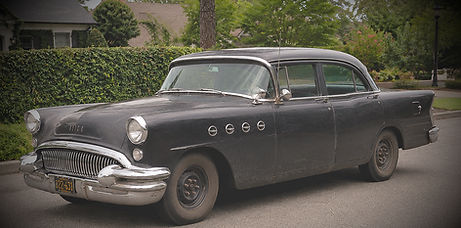
Grandfather Dodd's old Buick was a great gift, but the costs of gas and oil were high compared to my Vespa.

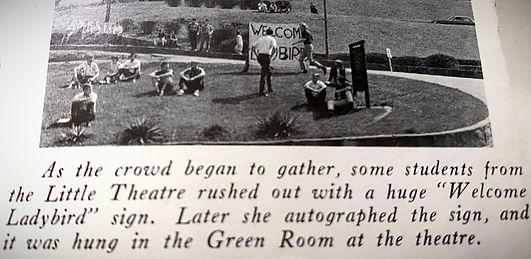
The school announced that no signs were to be allowed for the visit of the president's wife.
I did not go along with that decision.
Click to view gallery

Played the lead in The Best Man

After five years and multiple failures, I was finally able to smile.

I had invited a girl from Asheville to our homecoming celebration, but I was disappointed at how poorly organized and underfunded the Homecoming Dance was, with a small group of the marching band members attempting to play dance music in a cold and undecorated gym. This was just a small excerpt of several letters to the school editor.

The fair’s theme,
“Man and His World.”

The summer we fell in love.
Photo taken by my father


Habitat 67 — Moshe Safdie’s experimental modular housing complex, built from stacked prefabricated concrete units. It remains one of Montreal’s most recognizable architectural landmarks.
