Chapter 10 : Asheville River Cabins
The next thirteen years were a period of transition. Fortunately, Rebecca worked hard and was successful in her position at the Department of Transportation. For several years, she also worked on weekends at a manufacturing job in the Research Triangle.
No longer a college professor, no longer owner of a commercial real estate company. I was still a struggling Amway distributor, reading positive-thinking books and listening to audio tapes by others who, through perseverance, had climbed to success. I would attend weekly meetings where the Amway plan was explained to new prospects. We were encouraged to attend to support the group. Amway’s main point was that it provided everyone with an opportunity to participate in the free-enterprise system. I was sold on this idea and reflected on how my grandfather never wanted to work for another man.
During those years, I had a paper route that required me to rise at 3:30 am every morning for over five years. I would tell the boys that if they wanted to make some money on the weekends, they had to wake up on their own and be ready by 3:30 a.m. Although it was not often, they did take advantage of the opportunity. Their job was mainly to fold the papers into the plastic bags.
One day, as I was leaving the house to work out at the spa, two clean-cut young men knocked on the door, wanting to share information about the Mormon Church. I was impressed by their clean-cut looks and demeanor, especially in comparison to some of Ben’s high school friends. I told the young elders they were welcome to speak with my son. Ben was always open and friendly to everyone. A stranger was just a friend he hadn’t met yet. The Mormon missionaries returned several times before Ben approached me to join the Mormon Church. Over time, the entire family joined. We were impressed by how friendly and family-oriented the members were, and the idea of abstaining from alcohol and caffeine sounded healthy. As I began reading the Book of Mormon, I was concerned that the Mormon God told a man to kill a guard to retrieve something of value. This didn’t register with me since a God could have easily put the guard into a temporary deep sleep rather than have this man kill him. Over the years, I became increasingly aware of additional discrepancies. The book portrays vast empires with cities, warfare, metallurgy, horses, elephants, and steel weapons in pre-Columbian America. Archaeology has never confirmed the existence of such advanced societies in the Americas during the time periods (c. 600 B.C. – 421 A.D.) described.
When Ben graduated from high school, he decided to go on a mission for the church. He was sent to Alaska, where he referred to himself as being part of the “frozen chosen”. Since his bedroom was empty, I decided to make it available to children in foster care. The entire family was involved in welcoming these children from disadvantaged homes into our home. Over five years, we cared for several children, all of them boys. One came by years later wanting to show off his first car and to hug me.
My parents invited me to a big Fourth of July party at their home in Asheville in 1999. They had a live band playing on the river’s edge with a large outdoor grill for the typical southern pig-picking. They had a nice little crowd of folks, mainly from the seven mobile homes they had on their six and a half acres of land alongside the French Broad River next to the Fireman’s Camp. Somewhat ironic, but the land the camp now owned was previously owned by distant members of Rebecca’s family.
The renters were all friends with my parents, creating a small community in a scenic setting. Folks were drinking and dancing. Even my mother, in her late seventies, was dancing. The next morning, as I was leaving for my five-hour drive back to Raleigh, I shook my father’s hand, now in his 80s and looking a little frail as he sat at the dinner table, telling him that next time I’ll bring Rebecca and the kids with me. My mother stood by the door, waiting for her warm goodbye hug from me. After I hugged her and said goodbye, I took a few steps before a strong feeling came over me that this was going to be the last time I would see one of them. I turned around and saw my mother standing strong, beaming with delight, while my father sat at the table, looking tired. I walked back to my father, gave him a strong hug, then walked past my mother and left. Later that day at the dinner table, my mother had a heart attack and was gone within minutes. For years afterwards, I would regret not hugging my mother a second time on my way out. It was not until many years later, at an ayahuasca ceremony in the mountains of Ecuador, after taking a dose of magic mushrooms, that another strong feeling came over me that I should not feel bad about the second hug I didn’t give my mother, that it meant more to her to see her son embrace his father before she passed.
My father had lived alone for over a year after my mother’s death. He became ill and was sent to the hospital. Shortly afterwards, he got out of bed and walked into the hall, where he lost his balance and fell backwards, causing a head injury so severe that it required an operation. Before the operation, I spoke with him by phone from my home in Raleigh. He sounded weak and tired. I told him that perhaps he should delay the operation until he felt stronger, but he replied that he wanted to get it over with. He died on the operating table. I’ve often wondered if what he was really saying to me was that life was no longer worth living without Mom.
My father had made me the executor of his will. It was my responsibility to sell his properties and divide the proceeds among his heirs, my two brothers, and me.
He was named William after a highly respected, wealthy uncle who had a net worth of $300,000 in the early 1900s. My father’s goal in life, it seems, was to exceed that figure, which he did by leaving each of his sons a $100,000 CD as well as a home on six and a half acres valued in 2000 at $300,000, along with other land holdings worth over $100,000.
The home sat for a time as I tried to get my brothers to buy it, but like me, we all owned homes and had settled down far from Asheville. One day, Rebecca came to me, saying that the Department of Transportation had just offered her the position as head of the appraisal unit in Asheville. As the first woman in that position, she had broken a glass ceiling. I was immensely proud of her.
Like so many other things in my life, the timing seemed scripted as if by a playwright.
I paid my brothers more than two-thirds of the property’s appraised value, sold my home in Raleigh, and moved to Asheville.
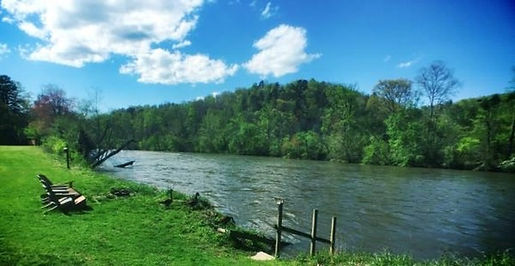
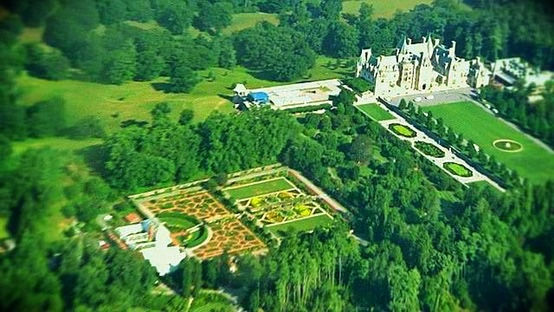
After living in a typical neighborhood for 20 years, life on six and a half acres along one of the oldest rivers in the world was exciting. Rebecca and I wanted to check out our surroundings. We noticed that there was a road on the other side of the river, so one day we drove down the dirt road to see where it went. After passing a large stable with horses, we eventually realised that we were inside the Biltmore House grounds. We now knew that all the beautiful wooded areas across the river from us were part of the Biltmore Estate. I often thought about how George Vanderbilt traveled all over the world and decided that Asheville was where he wanted to live. Those of us who grew up here simply took the beauty of the mountains for granted. Rebecca and I decided we wanted to check out the river, so we loaded a large kayak into the back of the truck along with an electric motor and battery, and had Ben drive to the next county to drop us off for a river trip back home. About halfway, we came to a location where the river narrowed, caused by two large trees on each side of the river falling in such a way that there was only a four-foot opening between the two fallen trees. The flow of the river was so strong and fast at this point that there was little control; we were at the mercy of the river. The force of the water pushed us into one of the trees, causing the kayak to capsize. It happened so fast that in an instant, I was deep underwater, reaching up to grab the blade of the outboard motor. I was able to get back into the kayak, while Rebecca was able to grab hold of the stiraform lid from the cooler as she was being washed downriver. I was still in the area of the fallen trees and realised that the reason the kayak was not moving was that the battery had fallen into the thickets of tree limbs below the water. No matter how hard I pulled, the battery would not dislodge from the submerged limbs. My only option was to remove the motor from the kayak and throw it overboard. Fortunately, I had a paddle and was now able to go after Rebecca, who was no longer in sight. I kept yelling for her, but was unable to hear anything. She had been swept quite a ways downriver and was hanging onto a large tree when I finally found her. We both realised that we were lucky and that this could have ended tragically. Up to this point, whenever we would toast drinks with friends, the toast was "To wealth, health, and happiness". After this experience, we added to the toast..." a painless passing and a waterless grave"!
The idea that the river took my electric motor was not something I was willing to just ignore. We later went back, but this time prepared with lifejackets, rope, and wire cutters. I climbed out on one of the fallen trees, reached down into the water, and pulled up my motor still connected to the entangled battery. Holding on to the rubber grip while balancing on the narrow tree trunk, I took out my wire cutters, prepared to cut the motor free from the battery. Before I could cut the cable, the motor slipped out of the rubber grip and back into the water. Since I had both hands involved in this task, once the motor fell, so did I. Fortunately, this time I had a rope tied around my waist, so Rebecca was able to keep me from being washed away. I managed to climb onto the bank and back to the fallen tree, where once again I was going to attempt the rescue of my motor. Before I could reach it, thunder, lightning, and heavy rain came all at once, causing us to retreat from this futile effort. We later heard from those who lived all their lives near the river that once the river gods take something, they refuse to give it back.
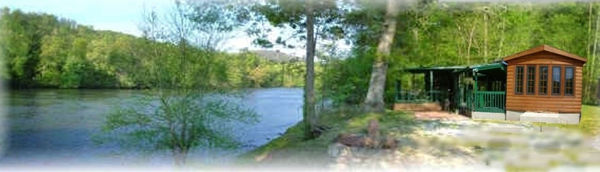
The rental income from the Mobile home lots was nice, but I knew that Asheville was best known as a tourist destination. There was an old log cabin on the property that we referred to as the “100-year-old cabin,” although it was likely even older. I decided to renovate it completely, including new wiring, plumbing, a modern bathroom with a shower, and a modern kitchen. I pulled up the old tile, sanded the original wood floor, and added stain; it came out beautifully. Furnished it with age-appropriate furniture, attempting to keep everything looking rustic. I developed a website featuring photographs of the cabin’s interior and exterior, along with a daily rental amount. Slowly, I began to get a few reservations. The reviews were glowing about the cabin and its beautiful river view. The only negative point was having a mobile home park a few hundred feet behind you. This small success encouraged me to purchase two used park-model RVs (recreational vehicles) as my next step toward launching a vacation rental business.
I enjoyed renovating both the interior and exterior. I would buy cedar lumber and use an electric nail gun to finish the entire interior. On the exterior, I purchased log siding, which, once nailed in place, resembled an actual log cabin. I placed one at each end of the property at the river’s edge. This brought even more reservations with glowing reviews about being right at the river’s edge. However, reviews mentioned that they had to drive through a mobile home park a few hundred feet away to reach the cabin. At this point, I realized that the mobile home park had to go if I was going to turn this property into a tourist destination. I sent a letter to all the renters announcing that the park would close this time next year. They would not be charged for their last month. They all seemed to understand, and the transition was quiet.
I purchased two additional used RVs and converted them into rustic log cabins once again. I recall an occasion when shopping for furniture for one cabin, when I found a table and lamp that really caught my eye. When asked about the unusually high $500 price, the salesman acknowledged it was an unusual set. When he asked where I plan to use it, I told him that it would be in one of my rental properties. He quickly said that it was too nice for a rental property and asked if I would follow him to another showroom, where he would show me more appropriate items for my needs. I thanked him for his help, but I explained that I only put in my rentals the same quality of furniture I would put in my own home. I purchased the $500 table and lamp for my cabin, which did not go unnoticed in several reviews.
After the mobile homes were removed, my reviews improved, and the business started to grow. At about this time, a developer decided to purchase the property behind me, which was a large pasture situated on a hill. He also wanted my property, but I told him I was not interested. In an effort to persuade me to sell, he diverted water runoff from his development onto my property. I took videos of the massive amount of water as it actually washed away my paver driveway. County inspectors seemed to favor the developer by taking no action on the problem. I was forced to hire a lawyer, which was not easy, since most were reluctant to take on a suit against a local developer. I found a young female attorney willing to file a lawsuit on my behalf. She soon found she was up against not only the developer’s attorney but also the attorneys for the engineer & architect. Overwhelmed, she brought on another attorney. Long story short, I paid $100,000 in attorney fees, settled for $50,000, and had the water rerouted off my property. I learned a few years later that the developer had filed for bankruptcy.
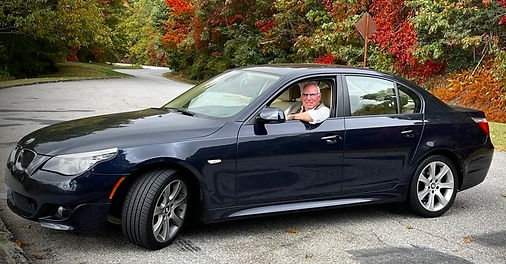
The ordeal had been so stressful that Rebecca and I decided we needed a short vacation. Back in the summer of 1972, our European vacation included every country except Spain. So, we decided to go to Spain this time. One of the highlights of our 1972 trip was visiting the BMW factory in Munich, Germany, and I was so impressed with it that I vowed to return someday for my own BMW. The year was 2008, I placed my order for a 535xi – 3.0L twin-turbo inline-6, 300 hp with all the bells & whistles. I would take delivery at the Munich factory.
When we arrived in Munich, we were informed that, under the law, if we drove in the snow and had an accident, we would be automatically charged if the vehicle lacked snow tires. I told them we weren’t planning to travel anywhere with snow. As we prepared to leave, I asked if someone could set up a route on the DVD-based iDrive Navigation system from Munich to Marbella, Spain.
As we followed the directions on the navigation system, we found ourselves in the Swiss Alps on roads that were packed with snow. Fortunately, the XI on the 535xi stood for all-wheel drive all the time. We never had a problem. We met Rebecca’s brother and his wife in Marbella, Spain, and traveled across the country together. On one of Spain’s high-speed highways, my brother-in-law was driving at 100 mph while the girls dozed off in the back seat. The recommended break-in speed, as specified by BMW, was to keep below 100 mph. To this day, 18 years later, the BMW has never had any motor or transmission problems and is still being used daily by my son.
In Madrid, we all took a tour bus around the city. At one point, we were to change buses. As I climbed on the bus, a young man pushed by me to give something to the bus driver, as two other men came up behind me while the bus driver closed the doors, pressing the two behind me onto me, while the one who pushed by me now wanted out, and I was trapped for a moment between the three of them The doors opened, and the men got off as I reached back and found my wallet missing. I angrily asked who had my wallet as all three men ran in opposite directions. It was obvious to me that the bus driver was in on it, but there was little that I could do. When we returned to the hotel and asked the staff to help us call and cancel the credit cards, they told us the law required us to go to the police station and file a formal report. I had to drop off the BMW at the shipping company for delivery to the US, so Rebecca went to the police station. She had to sit there for three hours as they processed an entire room full of other victims. One woman who did not speak English tried to communicate with Rebecca, who knew only a few words of Spanish. Somehow, this woman got the idea that a thief had stolen Rebecca’s clothes, so she gave Rebecca the sweater she was wearing. Rebecca tried to give it back to her, but the lady was insistent. This insident along with others, while touring Spain, seemed to awaken memories of Rebecca's grandmother, of Spanish descent, and her kind and affectionate nature. When we returned to Asheville, Rebecca started taking Spanish classes at a local college. She was very impressed by her teacher, who was from Cuenca, Ecuador, and spoke passionately about the warm-hearted people of Ecuador.
In 2015, we stopped taking reservations for Asheville River Cabins for over a month and decided to spend the 30 days in Ecuador. Online, I reserved a three-bedroom apartment in Cuenca, Ecuador, and flew down with our son Ben. Our son, Atticus, who had been living in Japan and China for several years, joined us in Quito, Ecuador. We hired a driver with a van to drive us on a week’s tour of Ecuador. In the larger cities, the landscape resembled that of the U.S., with tall buildings, shopping malls, and hotels. The small towns and rural areas resembled third-world countries. People were friendly; when you met a woman, she would hug you and kiss your cheek. That was until COVID hit some years later.
On other trips to South America, we would visit Costa Rica and Colombia. In Costa Rica, we stayed at a hotel with friends from the US for a week, then rented a car and drove around the country for a week. In Colombia, we were advised to stay within the vicinity of our hotel, as it was the safest area.
In 2017, we decided to live in Cuenca, Ecuador, where I could manage reservations online while my son, Ben, handled the on-site cleaning staff. Two weeks before we left, my son Atticus surprised us with his fiancée from China and his plans to get married.
We went shopping for a wedding dress, rented tuxedos, and had a wedding in front of the same little rock church where my father and I both got married. It worked out well with my son, Ben, in his apartment on the lower level of the house, and Atticus and his wife, Miao, on the upper level. We left as planned to live in Cuenca.
Within nine months, our granddaughter Summer was born. Two years later, in 2019, I asked the boys whether they wanted to continue running the business or sell it. Atticus said he wanted to move back to Raleigh, where he grew up and still had friends. Ben wanted to stay in Asheville, where he had many friends. I called a real estate broker specializing in resort sales to ask about the current market conditions. She said she had a client looking to buy a resort and asked if she could come see mine. The rest is history; the buyer accepted my asking price, and we celebrated the transaction with my 76th birthday party at a nearby restaurant. I purchased a well-maintained mobile home on a piece of property for my son, Ben, and a new Toyota. Additionally, I purchased a lovely home in Raleigh for my son, Atticus, his daughter, and his pregnant wife to live in while I returned to Ecuador. Shortly afterward, my grandson, Archer, was born.
Rebecca and I came back to Raleigh for my 80th birthday. It was a great time with Ben and Atticus. We went to a movie and dinner together and had fun until Ben felt sick and, within eight weeks, died from pancreatic cancer. We had his funeral in Asheville, where around 30 of his friends showed up and spoke about how good a friend he had been.
After the deaths of both my parents and my first son, I expect the next one will be mine. I verily missed it recently as doctors were inserting a third stent to unclog another artery, and I had a problem that required an electric shock to my heart. It was so painful that it brought me out of the medically induced unconsciousness for a moment as I opened my eyes and screamed. Rebecca said she was concerned when she saw the doctor afterwards, he was as white as a ghost. He told her there was a problem, but he believed the electric shock saved my life.








Click to view gallery
Click to view gallery